Animal Movement Ecology
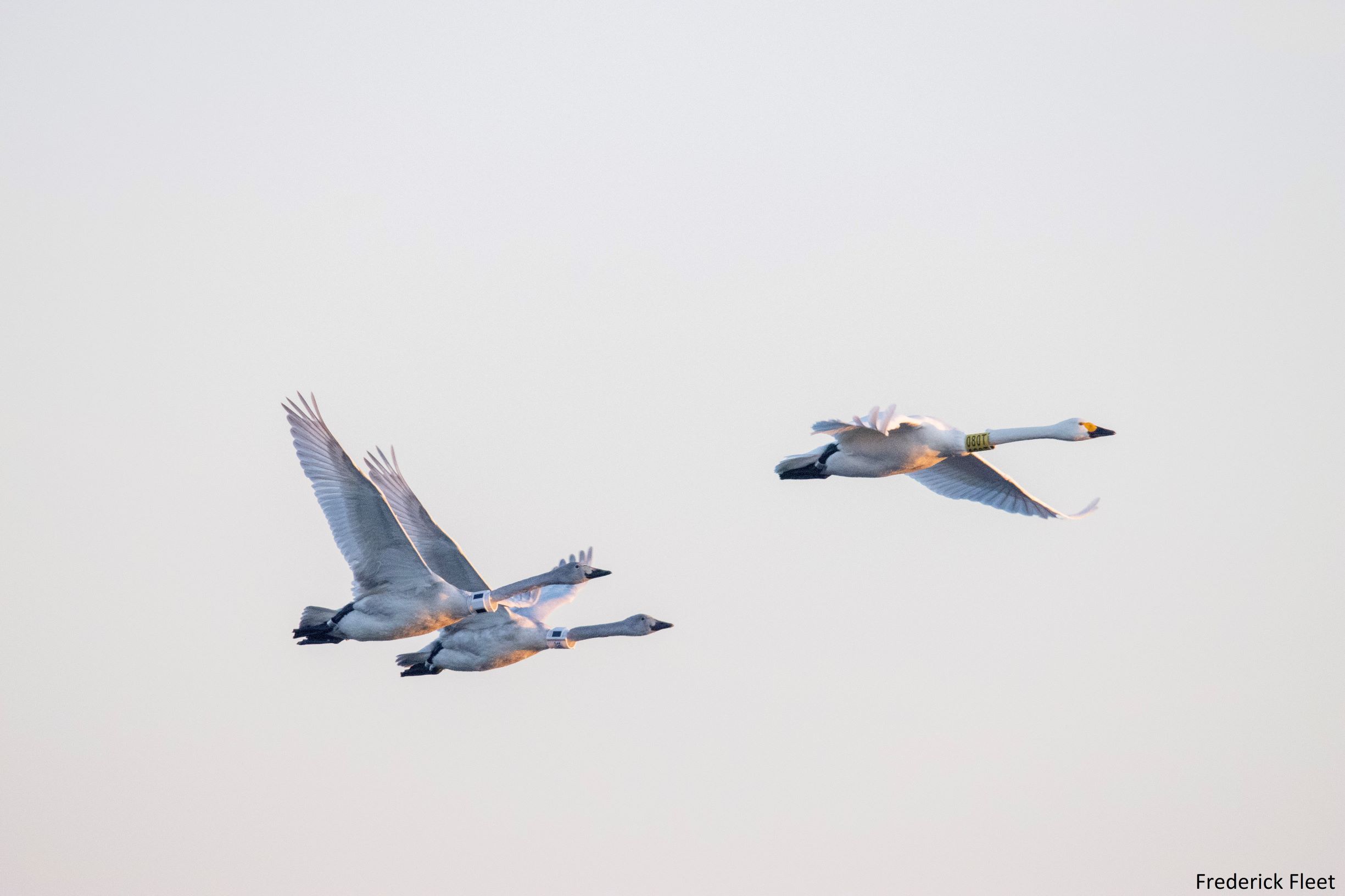
The main aim within this research theme is to improve the understanding of the mechanisms that shape animal movements at the individual level and subsequent consequences of these movements for individuals, populations or ecosystems. Our work focuses mainly on birds in the wild, often with an emphasis on migratory species and flight behaviour. We use complementary techniques such as radar monitoring, global tracking of individuals, data-analytic and mechanistic modelling approaches.
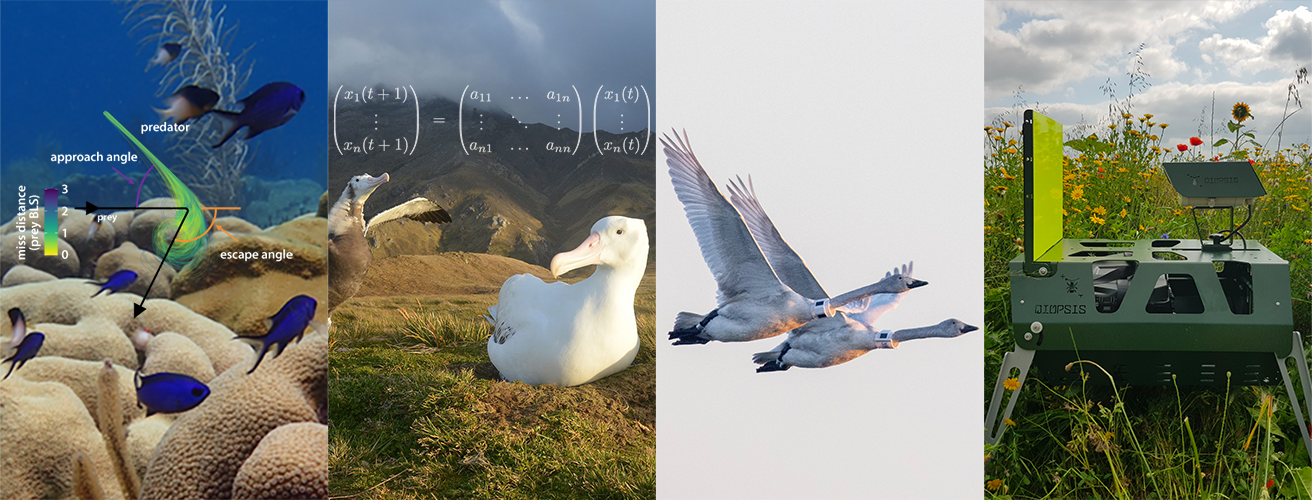
We study how individual movement and behaviour change in response to environmental pressures (abiotic and biotic) and how these individual responses affect populations persistence. To understand the complexity of such interactions we integrate knowledge from ecology, physiology, earth science and meteorology. We apply our research to resolve challenges related to human-wildlife interactions in which movement is a key factor (e.g., aviation safety, environmental impact of wind energy, human and animal health, animal conservation and population management).
Research Questions
Questions we are addressing in our research include:
- How animal movement and behaviour changes to external factors (such as winds, wildfires, climate change and other anthropogenic disturbances)?
- How do intrinsic and external factors interact to shape movement patterns at different scales in space and time?
- What are the consequences of individual movement strategies?
- How can we apply our understanding of movement strategies to help resolve human-wildlife conflicts and develop scientifically informed policy?
To facilitate research and work at the forefront of movement ecology, development of novel methods for studying animal movement is an important part of the research agenda. We develop data infrastructures to monitor bird migration and behaviour with radars and tracking devices and collaborate with partners with complementary expertise.
Staff
Research staff
Postdoctoral Researchers
PhD candidates
Research assistants and data scientists
Research Projects
Some examples of the projects where we have or had a leading role include:
- UvA Bird Tracking System an online data infrastructure for animal tracking and movement data analysis.
- Interactions between birds and offshore wind farms: drivers, consequences and tools for mitigation: a project to develop knowledge and tools to support the sustainable co-existence of birds and offshore wind farms in the North Sea (2018-2023)
- Offshore space use of Lesser Black-backed Gulls (Larus fuscus), funded by Gemini windpark, 2017 – 2021 (link thesis Elspeth Sage, link final report
- FlySafe Bird Avoidance Model providing near real-time information and forecasts on large scale bird mobility for the Belgian Air Force and the Royal Netherlands Air Force
- GloBAM a BioDivERsa funded project on Monitoring, Forecasting and Understanding globam biomass flows of aeiral migrants (2018-2022), see also the short promotional video here.
- Predicting muskrat movement and population development in support of the control organisation, funded by the Dutch water authorities
Master's research projects
Some examples of the master’s thesis topics we had in the past:
- Quantifying sensitivity of birds to fireworks disturbance. Bart Hoekstra, supervised by Willem Bouten and Judy Shamoun-Baranes, accepted in Frontiers in Ecology and the Environment.
- Foraging associations between lesser Black-backed gulls (Larus fuscus) and fisheries in the western Wadden Sea. Chris Tyson, supervised by Judy Shamoun-Baranes, Emiel van Loon and Kees Camphuysen: published in ICES J of Marine Science doi: 10.1093/icesjms/fsv021
- Detection of Avian Influenza from movement and behavioural data of Barnacle geese (Branta leucopsis) collected by tracking devices. Jitske Schrijver, supervised by Julia Karagicheva and Eldar Rakhimberdiev
- Overwintering on the Iberian Peninsula: a survival benefit compared to flying to Africa for Black-tailed Godwits (Limosa limosa)? Ronald van der Woude, supervised by Marie Stessens and Eldar Rakhimberdiev
- Mapping movement of the Bar-Tailed Godwit (Limosa lapponica) in relation to tidal patterns with Sentinel-1 CSAR. Isis Kaiser, supervised by Julia Karagicheva and Eldar Rakhimberdiev
Other research areas: