PhD defence ceremony by Eileen Enderle
- Date
- 22 January 2026
- Time
- 16:00
- Location
- Agnietenkapel
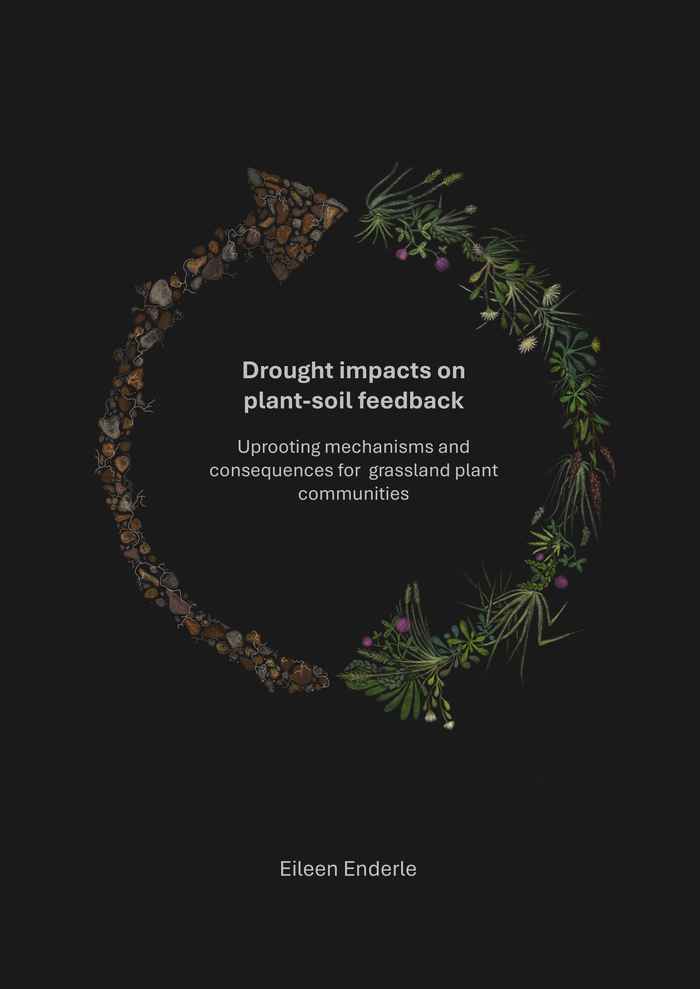
As a consequence of climate change, ecosystems are affected by more frequent and intense summer droughts. These extreme drought events are affecting plants directly, but also via reciprocal interactions with their associated rhizosphere biota – a mechanism that is also known as plant-soil feedback (PSF). In grasslands, plant species coexistence is stabilised by predominantly negative PSF. If drought impacts existing PSF, that imposes a threat on the stability of plant communities and may shift vegetation composition. This thesis sheds light on the mechanisms underlying drought-induced shifts in PSF and their consequences for plant community dynamics. A multi-year field-based mesocosm experiment was combined with several greenhouse experiments to assess the role of plant functional groups, root traits, root exudation, root litter and interspecific competition in determining PSF under drought. Plant species composition and PSF were monitored over multiple seasons of summer drought and periods of recovery to understand the implications of PSF responses to drought. Overall, drought responses of PSF differed between plant species, but were difficult to predict. Changes in PSF recovered fast after the drought ended and did not predict species abundances in the mesocosms. Independent of PSF, drought-induced changes in the soil remained to affect both plant communities and soil microbial communities after the end of drought. These effects were stronger and more persistent with an increasing number of consecutive droughts. In conclusion, plant-soil interactions, but not necessarily shifts in PSF, play a major role in shaping plant community dynamics during and beyond extreme drought events.