PhD defence ceremony by Renée van Schaijk
- Date
- 5 June 2026
- Time
- 14:00
- Location
- Aula - Lutherse kerk
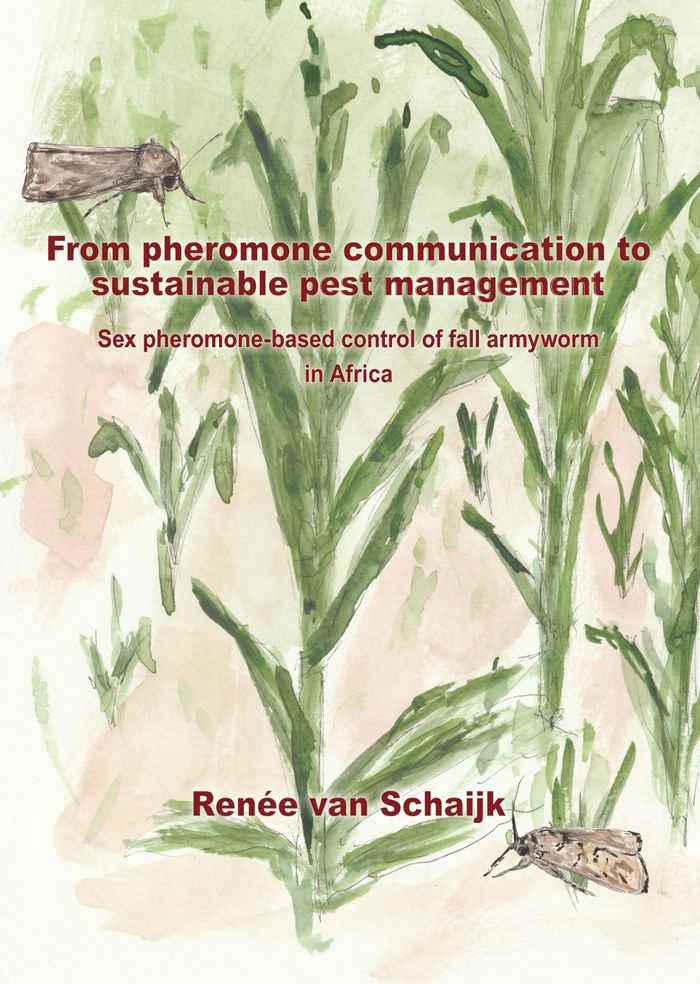
Driven by globalization and climate change, the spread of invasive species has become a major threat to biodiversity, agriculture and economies. The fall armyworm (Spodoptera frugiperda, FAW) is a highly impactful invasive insect pest that causes severe damage to crops such as maize. Since it was first reported in Africa in 2016, FAW has posed a major challenge for pest control in the continent. To effectively combat this pest, there is an urgent need for sustainable biocontrol strategies, such as baculovirus, and reliable pheromone-based monitoring systems.
In this thesis, I investigated the sex pheromone communication system of FAW in Africa to develop a reliable region-based monitoring system in Benin and Kenya. I found geographic variation in the female sex pheromone composition between these regions, but no differences in attraction of males. Based on these compositions, I developed self-formulated lures to compare their effectivity against commercially available lures. One of my self-formulated lures showed high species-specificity and a stable FAW catch rate over time, making it suitable for monitoring FAW populations in Benin.
When testing the effect of baculovirus SfMNPV on FAW, we found reduced susceptibility of FAW larvae when infected over multiple generations, but no change in pheromone composition, indicating that pheromone-based monitoring remains reliable under baculovirus-based control. In the field, we found that pheromone trap catches provide an effective tool to time baculovirus applications, resulting in reduced crop damage. Overall, this research highlights the potential of combining pheromone-based monitoring with virus-based control for sustainable FAW management in Benin.