Where the wild things are: Tracking biodiversity at ARTIS
By recording biodiversity in the park, researchers are building a baseline for urban nature in Amsterdam
28 April 2026
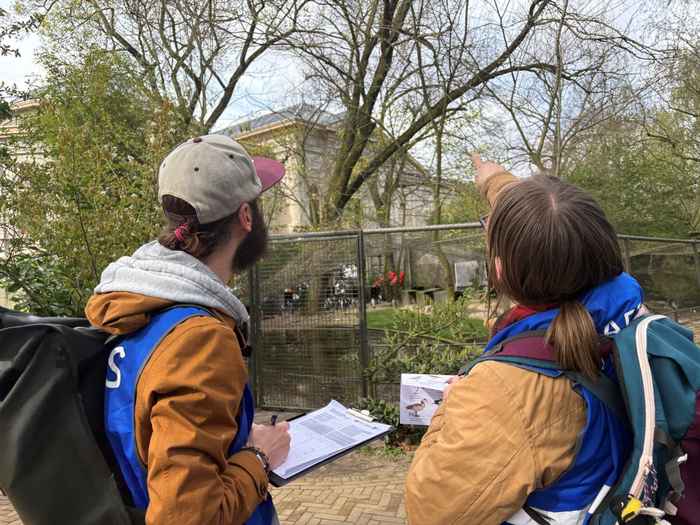
These observations aren't just for fun. ARTIS Amsterdam Royal Zoo, the Institute of Biodiversity and Ecosystem Dynamics (IBED) at the University of Amsterdam, and the City of Amsterdam are working to increase biodiversity in the city’s canals.
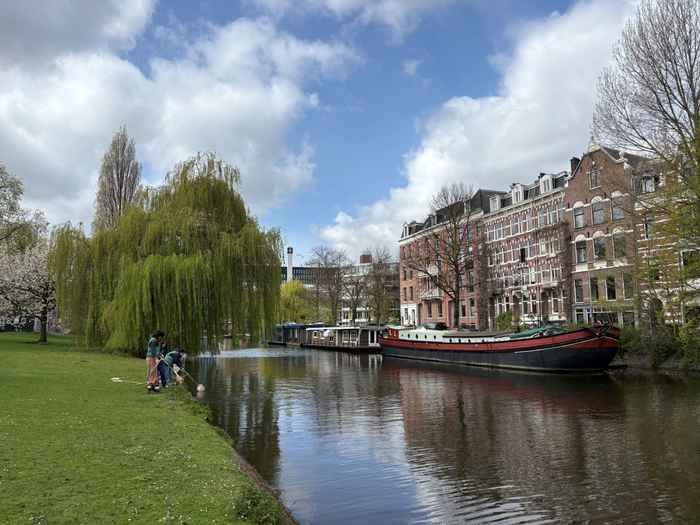
The reconstruction of a 100m quay wall stretch, along the canal behind ARTIS zoo, is part of this effort. Initiated by Ton Hilhorst, ARTIS’ garden designer, the nature-based quay will help boost biodiversity in the area. And by sampling all the living species in the area in advance, researchers can get a baseline measurement.
A treasure hunt for biodiversity
Urban green spaces like ARTIS sit in the middle of a densely populated city, yet they can still provide habitat for many wild species, explains Stacy Shinneman, a geoinformatician at IBED and one of the event organizers. But sometimes, humans create environments for their own needs, rather than the needs of the natural species. The canals are a great example of this. “Quays are straight walls, optimal for (recreational) boats but leaving no space for fish, amphibians, plants, and insects that need shelter or spawning grounds,” says Anne van Dijk, ARTIS biologist and head of the aquarium. “That’s why ARTIS took the initiative to transform the adjacent quay into a more natural ‘bank.’”
A bioblitz is a way to count the species before the work begins. Participants–– a mix of IBED researchers and students–– were split up into different groups for the day. One group counted birds in the park, while others sampled the canal water to document aquatic insects and survey plants and insects along the banks. Another group also looked at native insects and plants within the park.
Over the course of a few hours, attendees thoroughly inspected the sky, water, and ground, making note of what they saw. This baseline measurement is crucial, as researchers can get a scientific snapshot of which species are present before any measures are taken. “Without that before-measurement, any changes we observe after the redesign are just anecdotes,” says Harm van der Geest, an ecologist at IBED. “With it, we can actually say something meaningful about whether making a canal more nature-friendly truly makes a difference.”
City collaborations
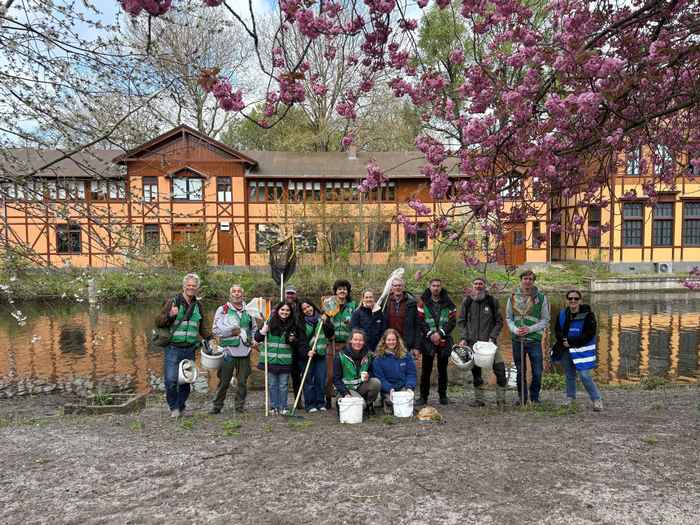
Urban ecology is an interdisciplinary field that relies on close collaboration. This event highlighted and strengthened these partnerships: IBED researchers contribute their scientific expertise, ARTIS provides the location and network, along with a deep commitment to connecting people with nature, and the City of Amsterdam makes the decisions that shape the city's infrastructure. “When those three parties work together from the start, the research becomes more relevant, the interventions become better informed, and the outcomes are more likely to actually stick,” says van der Geest. “That kind of collaboration is increasingly rare and incredibly valuable.”
Anne van Dijk echoed this sentiment. A healthy ecosystem consists of many different species that all depend on each other; plants, insects, and birds, but also the fungi and invertebrates in the soil and algae or sponges in the water. “Monitoring all these organisms requires an enormous amount of knowledge and expertise; something the UvA can bring to the table,” she says. “At the same time, ARTIS functions as a kind of ‘testing ground’ for small initiatives with potentially big impacts where we can also inspire and activate visitors to treat nature responsibly.”
The event was also an opportunity to learn from each other. “It is always meaningful to bring people from different backgrounds and disciplines together to exchange knowledge and ideas,” says Rotem Zilber, one of the event organizers and a biodiversity monitoring sites manager at IBED.
Beyond the blitz
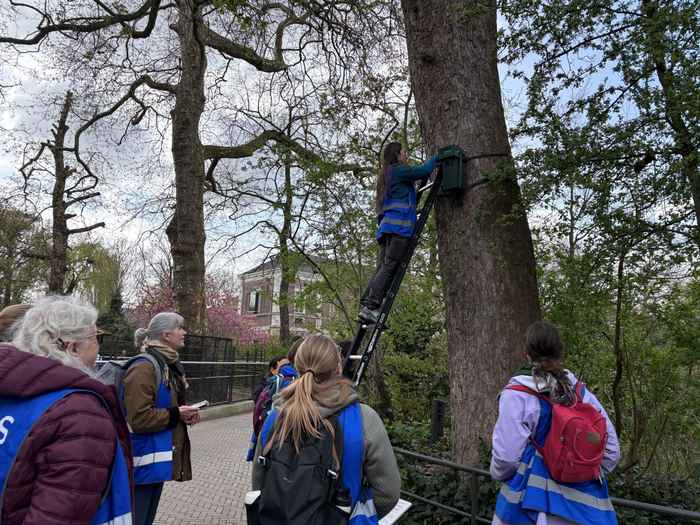
The ecological role of ARTIS is also not limited to the park barriers, says Hillhorst. “We already collect excess rainwater from the Plantage Middenlaan, and this natural quay wall will connect the Park and the city even more,” he says. The collaboration also helps strengthen other research projects. For several years, IBED ecologist Emily Burdfield-Steel has been working on a project on the effects of light pollution on bird breeding success in cities like Amsterdam. During the visit, she and some of her students were able to install cameras in nest boxes to monitor birds within the park. ARTIS was recently designated as Amsterdam’s first Urban Night Sky Space, which makes it an especially interesting field site for studying light pollution. “We can separate effects of light pollution from more general effects of urbanisation,” says Burdfield-Steel. “This is both interesting from a theoretical perspective - but also can help demonstrate the value of preserving dark areas."
The data from the bioblitz also nicely complements the ARISE project, for which various sensors had already been deployed to track bird migration in the Netherlands. The zoo is a “demonstration site”, where researchers test and deploy biodiversity monitoring sensors. The zoo provides a platform to showcase science in action to the public and highlight the importance of (local) biodiversity.
Organizers plan to repeat the day in the future, potentially with other students, Artis visitors or volunteers. As van der Geest explains, one-day bioblitzes are a great way to mobilize a lot of observers quickly, but ecologically, it's most powerful when it's repeated. He emphasises that this kind of science can–and should–be done more throughout the city. “Urban biodiversity monitoring isn't just academically interesting, it has direct policy relevance as Amsterdam works toward becoming a greener, more resilient city,” he says. “Events like this put concrete data behind those ambitions.”