Judy Shamoun–Baranes nominated for the prestigious Huibregtsen Prize
26 August 2026
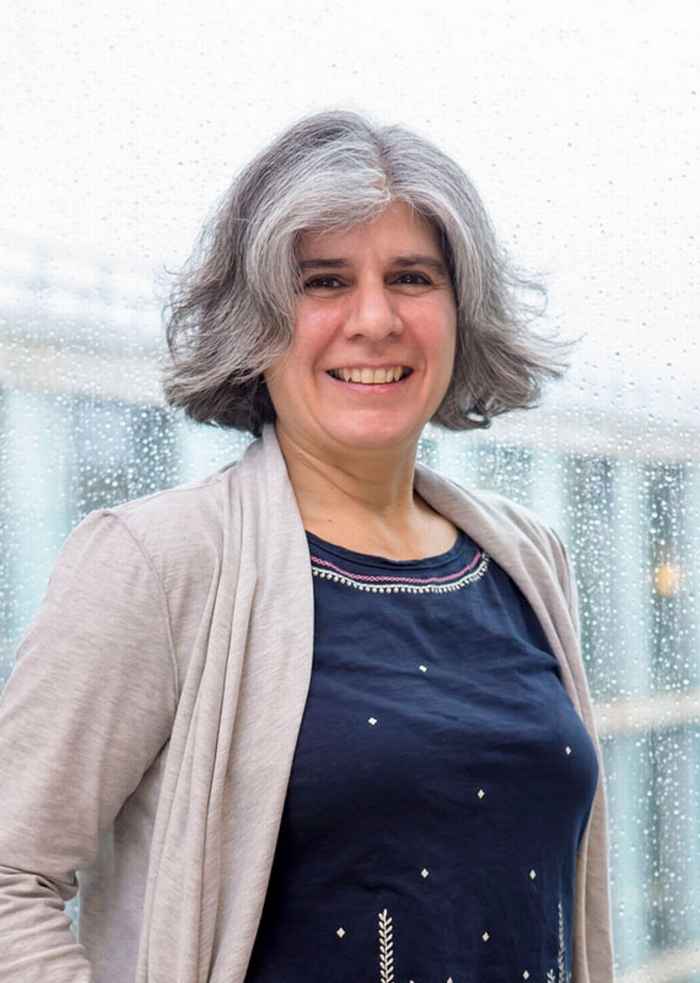
Judy Shamoun–Baranes is one of six nominees for the prestigious Huibregtsen Prize 2026 with the research project "Nighttime bird migration over the North Sea".
Millions of birds fly over the North Sea during their spring and autumn migrations. This migration has become even more perilous for the birds due to the construction of offshore wind farms, which force them to make long, exhausting detours. To mitigate this, a ‘start-stop’ procedure is employed, significantly reducing the rotational speed of wind turbines when birds are passing overhead. However, shutting down turbines too frequently or unexpectedly results in a substantial drop in renewable energy output or creates imbalances in the power grid. Judy Shamoun-Baranes and het team therefore developed a model to predict when birds will pass wind farms in the North Sea. This was a major challenge, as radar signals from small songbirds had to be distinguished from rain and wind. Furthermore, simulations needed to accurately predict whether, when, and at what altitude birds would migrate past a wind farm. Judy Shamoun-Baranes and her team discovered that these factors were determined by weather conditions both in the departure areas—hundreds of kilometers away—and over the North Sea itself. Ultimately, it turned out that most birds pass a wind farm for only a few hours each year, meaning the start-stop procedure rarely needs to be implemented. Developing and using this prediction model required collaboration across diverse research disciplines and with stakeholders such as government ministries, wind farm operators, grid managers, and nature conservation organizations—no small feat. Thanks to Judy Shamoun-Baranes and her team, a stable, sustainable energy network can coexist with the protection of migratory birds.