Transition Fund Nature Inclusive Farming
21 September 2026
Currently, Dutch farming practices rely heavily on pesticides and petrochemicals, which are unsustainable and threaten nature in the Netherlands. Due to the high concentration of cattle (five times more per hectare than in Germany), excess nitrogen loading occurs, leading to environmental pollution. Additionally, pesticides are used on a large scale, and many farms have expanded at the cost of pre-existing ecological structures, including hedgerows. This has led to a decline in species diversity, abundance, and even local extinctions in the Netherlands. Insects have declined, and most farmland birds that were once present are now extirpated, with dwindling numbers of meadow birds despite millions of euros spent annually to conserve them. These trends continue.
13,000 farmers, managed by one of the 39 agricultural collectives united in Boerennatuur in the Netherlands, aim to change this by promoting more extensive and nature-inclusive solutions such as mosaic crop and herb farming, strip farming, and lower cattle densities. However, transitioning to these practices requires major investments. While this should be a task for the Dutch government, consistent policies have lacked in recent decades. The agricultural collectives, including Collectief Natuurinclusief (represented by Hermen Vreugdenhil), have developed GIS-based strategies to support the adoption of nature-inclusive farming practices. Together with these collectives, we developed an initiative to investigate how a fund could financially support 500 farmers in adopting these practices. The idea is to establish a public-private fund generating 20 million euros per year.
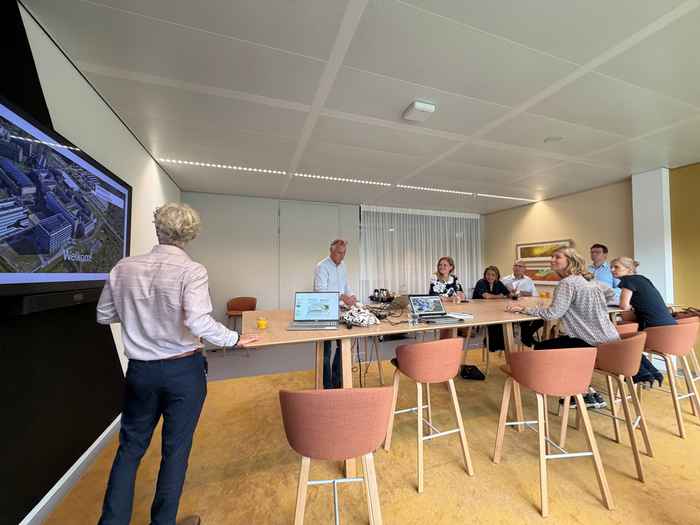
On Wednesday, a closed brainstorm session was held at Sustainalab to receive input from professional banks like TRIODOS and ING, investment funds, and Urgenda. My input focused on providing landscape and ecological expertise, particularly on hedgerows and their importance in supporting biodiversity and ecosystem services, such as phytoremediation of volatiles.
We concluded that the initiative is necessary and requires support from policymakers, presenting an opportunity for them to provide consistent support for nature-inclusive practices. One key finding was that companies supporting this fund would like to see where their investments go. We discussed carbon credits and biodiversity credits, but the latter was seen as complex. The idea of developing credits based on ecological elements supported by LiDAR (airborne laser scanning of vegetation) was considered an attractive alternative. The collectives already use GIS-based mapping to track where they implement nature-inclusive agriculture (NIA) practices at the field scale. Engaging in these initiatives also identifies potential knowledge gaps and research development opportunities.
We will now continue the initiative to find support from potential investors (food chain, banks) and policy support. Regardless of its success, it is beneficial for the involved institutes that IBED is a crucial knowledge institute to include.